
Customers only buy when doing nothing becomes more expensive.
In your personal life, how often do you re-roof your home well in advance of actually needing it? In other words, do you tend to be preemptive with major purchases or do you wait until there is evidence of immediate need (i.e., roof leaking) before you buy? Shifting to the business world, how often do companies buy enterprise software in advance of needing it?
The short answer is almost never. The next question becomes the definition of "needing;" salespeople often uncover a perceived need, but that need lacks urgency to fulfill. What, then, are the steps that the customer takes before accepting that they need to buy?
First, they try workarounds that may include process changes or modifying solutions already in place. Then they consider developing a solution to the challenge, since IT people are "free" — in other words, companies try every possible alternative to buying, before they accept that they need to buy a solution to solve a problem.
Once a company has determined that they have no alternative path other than to purchase software, they delay the decision until such time that the financial impact is significant enough to warrant addressing the issue. When that financial impact intersects with a date when that impact occurs, it is often referred to as the "compelling event."
Understanding the urgency of the situation requires the salesperson to ask only two questions: Why purchase in this particular time frame? And What happens if they don't do anything by this timeframe? Because customers only buy solutions as a last resort, the answer to the second question is critical.
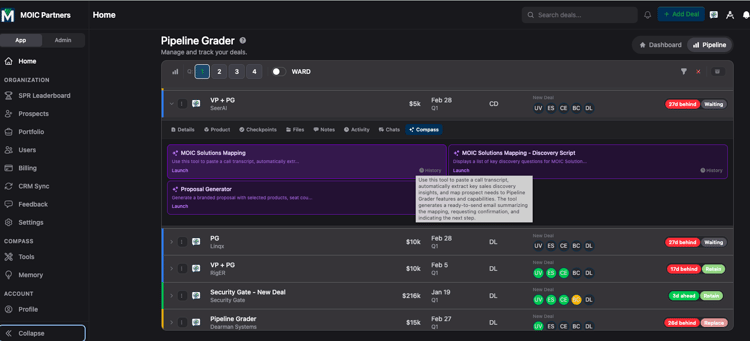
Within MOIC Pipeline Grader, uncovering the compelling event is one of the five objective markers that drive an accurate sales forecast at the line item level. What can make learning this detail somewhat elusive is that it is likely that only the "Executive Sponsor" of the deal (whose money is it?) knows the answers. Project Managers are more likely trying to address issues that they perceive are important or were told to address by a certain timeframe.
In the end, accurately predicting the timing of when a deal will close will likely be determined by the compelling event (unless you choose to radically discount to artificially drive urgency instead of letting the business case maximize pricing). If your sales team struggles to uncover your customers' compelling events and understanding why buying is occurring as a last resort, login to Pipeline Grader at www.moicpartners.com.


.jpeg?width=352&name=Photo%20-%20shutterstock_1972218197%20(small).jpeg)